




Índice
- Where do used snus pouches go? ›
- Why used pouches should not go in the toilet ›
- Why used pouches should not be dropped on the ground ›
- How to use the lid compartment ›
- What to do with empty snus cans ›
- Keep used pouches away from children and pets ›
- What to do if a child or a pet swallows a pouch ›
- Sources ›
At a glance
- Household waste: used pouches go in the general waste bin.[1]
- Not in the toilet: flushed snus causes problems at wastewater treatment plants.[1]
- Not on the ground: used pouches contain nicotine, heavy metals and small amounts of plastic.[2]
- Children and pets: store used pouches in a closed container that children cannot open, and call a poison centre if a pouch is swallowed.[5][7]
When a pouch is finished, the next question is short but important: where does it go? A used pouch is small, and it is easy to drop it on the pavement or in the toilet. Both choices cause problems. This guide explains the right way to discard used snus and nicotine pouches, what to do with the empty can, and how to protect children and pets.
Where do used snus pouches go?
Used snus and nicotine pouches go in household waste. They do not belong in the toilet, on the street or in nature.[1][2]
This rule applies to both product groups. Swedish Match states in a public appeal that snus should not be thrown into the toilet but into the waste bin.[1] The same logic applies to tobacco-free nicotine pouches, which made up the larger part of the snus litter found in Swedish cities in 2024.[2]
The table gives a quick overview of each item and where it belongs.
| Item | Where it goes | Reason |
|---|---|---|
| Used snus pouch | Household waste | Flushing causes problems at wastewater plants.[1] |
| Used nicotine pouch | Household waste | Contains nicotine and small amounts of plastic.[2] |
| Loose snus residue | Household waste | Snus belongs in the bin, not in the toilet.[1] |
| Plastic can and lid | Plastic collection, if local rules allow it | Polypropylene, marked as recyclable plastic no. 5.[3] |
| Cardboard can | Follow local rules | Paraffin-coated cardboard with a plastic lid.[4] |
Why used pouches should not go in the toilet
Flushed snus reaches the wastewater treatment plant. Swedish Match reports that cadmium from snus causes problems at these plants.[1]
The amounts are large. According to the same source, the equivalent of 1,100 tonnes of snus is flushed down toilets every year.[1] A single pouch looks harmless, but the total amount is large. A toilet is not a waste bin, and a pouch that is flushed is not removed from the environment. It only moves to a different place.
Why used pouches should not be dropped on the ground
A used pouch on the street or in nature does not simply disappear. Used snus and nicotine pouches contain nicotine, heavy metals and small amounts of plastic, which prevent them from fully decomposing.[2]
The Swedish organisation Keep Sweden Tidy measures litter in cities every year. In 2024, snus made up 21 percent of all litter in the measured cities. This made it the second most common type of litter after cigarette butts. Of the snus litter, about 65 percent were tobacco-free nicotine pouches and 35 percent were traditional brown snus.[2] The organisation also warns that used pouches can become microplastics over time, which can affect the health of animals and accumulate in the food chain.[2]
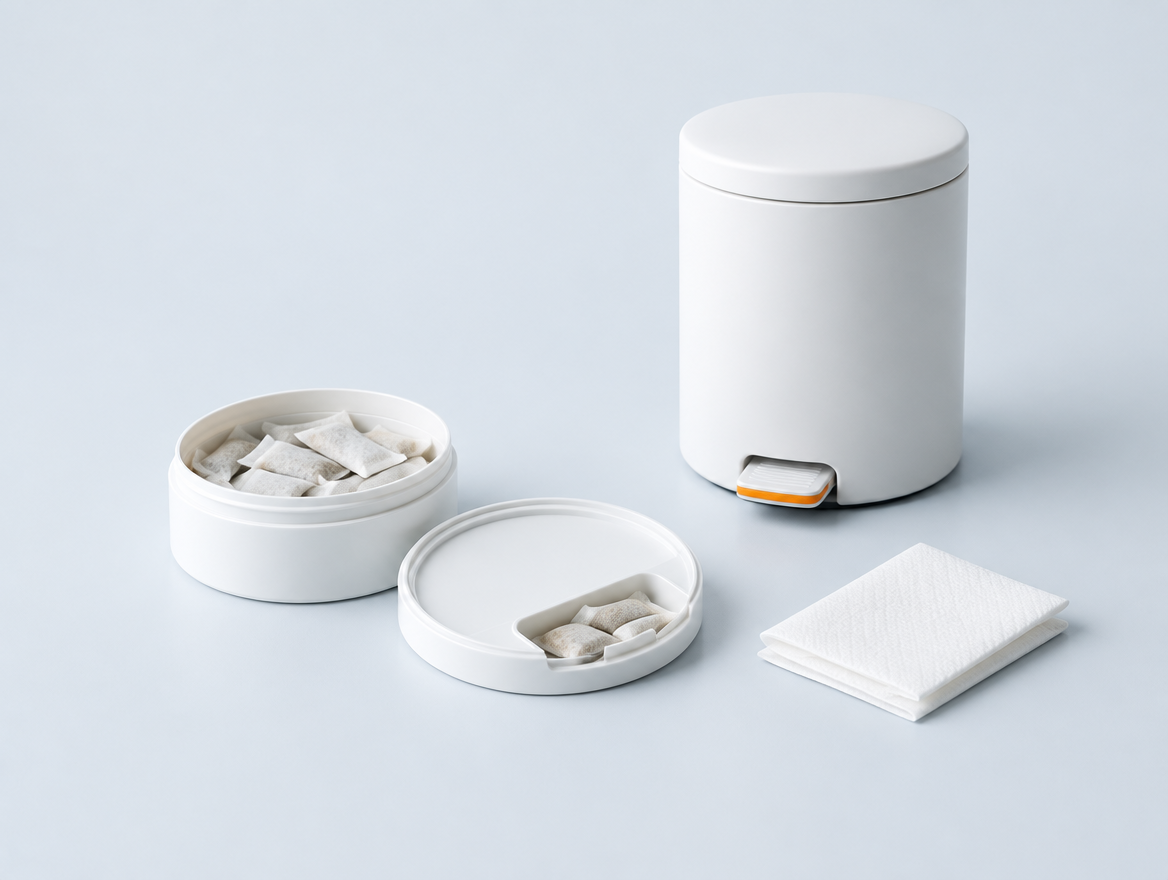
If no bin is near, keep the used pouch in the lid compartment of the can and discard it later.[1]
How to use the lid compartment
Many snus cans have a compartment in the lid. It is meant for storing used pouches until you can put them in a bin.[1]
Swedish Match points to this compartment in its appeal against flushing and littering.[1] It is the easiest solution when you are outdoors, on the way to work or in a place without a waste bin. Empty the compartment into the household waste at the next opportunity. A used pouch is moist, so it should not stay in the lid for days. If you want to know how the can and lid are built, read our article on snus can construction.
What to do with empty snus cans
Empty cans can often be recycled, but the correct bin depends on the material and on local waste rules. Check the rules of your municipality or waste service.
Snus and nicotine pouch cans are made of different materials. Swedish Match uses polypropylene for portion snus cans because portion snus dries out more easily. Loose snus is packed in paraffin-coated cardboard cans with a polypropylene lid.[4] According to the company, its plastic cans and lids are polypropylene and marked as recyclable plastic number 5.[3] Other manufacturers can use other materials, so the symbol on the can is the best guide.
Before you put a can into a recycling bin, remove all used pouches from the can and from the lid compartment. Used pouches are household waste, not packaging.[1]
Keep used pouches away from children and pets
Used pouches still contain nicotine. Store them, and fresh pouches, out of the reach of children and pets, and use a closed container that children cannot open.[5]
Nicotine is acutely toxic. The BfR names children among the groups at particular risk.[8] The US poison centre Poison Control advises to keep nicotine pouches up, away and out of reach of children, and to put used pouches in sealed containers that children cannot open.[5] The Swedish Poisons Information Centre reports that the swallowing of snus is one of the most common reasons for calls about children. Most of these children are under 4 years old. The centre adds that tobacco-free products may be more attractive to small children because they do not have a bitter taste.[6]
Pets are also at risk. Pet Poison Helpline lists nicotine pouches among the sources of nicotine poisoning in pets and describes nicotine as a fast-acting toxin with a narrow safety margin for animals. Signs can include drooling, vomiting, an abnormal heart rate, tremor and breathing problems.[7] Some nicotine products also contain xylitol, which is toxic for dogs.[7]
What to do if a child or a pet swallows a pouch
Remove any remaining pieces from the mouth and contact your local poison control centre or a doctor at once. For a pet, call a veterinarian or an animal poison helpline.[5][7]
Poison Control gives these first steps for people: remove any pouch pieces from the mouth, rinse the mouth with water and spit, then call a doctor or poison centre for advice. If a child swallows a pouch, the centre advises to seek medical attention immediately.[5] Symptoms of nicotine poisoning can include nausea, vomiting, stomach pain, drooling, sweating and tremor. In severe cases, the nervous system can be affected.[5]
The poison centre decides whether the child can stay at home or needs a doctor. The Swedish Poisons Information Centre reports that children relatively often vomit a swallowed pouch because of the effect of nicotine. In most of its cases, the advice is to wait at home and to see a doctor only if clear symptoms appear.[6] This decision belongs to the experts on the phone, so always call first. Keep the can at hand so that you can name the product and its nicotine content.
For a pet, Pet Poison Helpline advises to call an animal poison helpline or to seek veterinary treatment immediately.[7] What happens in the body of an adult after swallowing a pouch is described in our article snus swallowed: what happens in the body? General effects of use are covered in snus side effects.
Sources
- Swedish Match: Put the used pouch in the garbage, news item of 21 November 2016. www.swedishmatch.com
- Keep Sweden Tidy (Håll Sverige Rent), published by the Nordic Welfare Centre: From cigarette butts to snus: shifting trends in urban litter, 12 February 2025. nordicwelfare.org
- Swedish Match: Frequently asked questions (packaging materials). www.swedishmatch.com
- Swedish Match: Snus production. swedishmatch.com
- National Capital Poison Center (Poison Control, USA): Nicotine pouches: smoke-free but not risk-free. www.poison.org
- Giftinformationscentralen (Swedish Poisons Information Centre, part of the Swedish Medical Products Agency): Förgiftningsfall orsakade av tobaks- och nikotinprodukter, report on enquiries 2013 to 2021. www.giftinformation.se
- Pet Poison Helpline: Nicotine. www.petpoisonhelpline.com
- German Federal Institute for Risk Assessment (BfR): Health risk assessment of nicotine pouches. Updated BfR Opinion No. 023/2022, 7 October 2022. www.bfr.bund.de
This article is general information. It is not medical or legal advice for an individual case.
Encontre a bolsa certa
Compare intensidades, sabores e marcas na nossa loja.
Apenas para maiores de 18 anos. A nicotina é viciante. Vendemos os produtos mencionados nos nossos guias. O nosso conteúdo editorial é escrito de forma independente.